
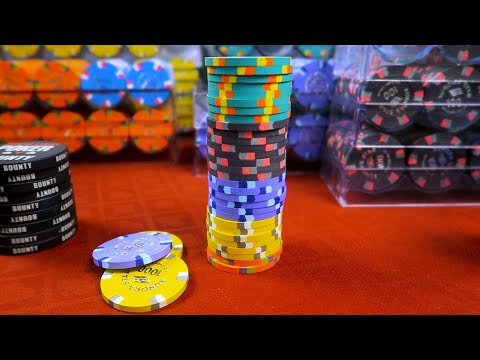
When we analyze the architecture of a modern online casino, the live dealer segment consistently emerges as the bridge between digital convenience and the tangible atmosphere of a brick-and-mortar floor. At Betplay Casino, this experience is not merely a camera pointed at a table; it is a carefully orchestrated production layer that combines broadcast technology, game-control units, and trained human croupiers into a seamless interface. The core premise is uncomplicated: instead of trusting a Random Number Generator to determine a virtual outcome, a real dealer manipulates physical cards, spins an actual roulette wheel, or draws numbered balls from a genuine hopper. We observe that this mechanism fulfills a fundamental psychological need for transparency, as every shuffle and spin is confirmable by the naked eye. The streaming infrastructure ensures synchronization between the physical event and the digital betting interface we see on screen, typically processing wagers within a defined acceptance window before the dealer closes the round. For players in France accessing Betplay Casino, this format changes a solitary screen session into a socially responsive event, where chat functions and multi-angle cameras reproduce the rhythm of a land-based session without the travel.
Comprehending the Dealer Interaction and Social Etiquette
Live chat functionality changes a numerical betting exercise into a communal experience, and we have studied how the communication flow upholds etiquette while softening the digital interface. A text input field sits adjacent to the stream, enabling typed messages to show up in a shared log visible to the dealer and, according to the room settings, to other seated players. The croupier typically responds verbally during procedure lulls, such as while shuffled cards are being loaded or during the payout phase; they will not break focus to answer a question when they are dealing a critical card. This establishes a natural rhythm where we can confirm a win, compliment a fellow player on a lucky side bet, or request a specific camera angle without interrupting the game’s integrity. Most rooms use a dedicated chat moderator or game presenter who screens abusive language and responds to generic queries about game rules, allowing the dealer to focus on the physical mechanics. We have observed that professional studios train dealers in English, but many also offer French-speaking tables, and at Betplay Casino, the lobby commonly flags which tables feature native French croupiers so we can select a linguistic environment where the nuance of a joking remark or a technical explanation is fully comprehended.
From an etiquette standpoint, the platform anticipates interactions to remain respectful, and the terms of service explicitly authorize the operator to mute or ban users who spam the chat or harass the dealer. We view this layer of moderation vital for preserving the elegance of a live setting. Beyond typing, some tables feature real-time reaction emojis that present small animated icons on the screen—applause, a thumbs-up, or a laughing emoji—providing a non-verbal way to participate in the group’s mood. When we assess the psychological impact, this social mirroring often extends our session duration, as a responsive table appears more engaging than a silent RNG-based slot. However, we should be mindful that the live chat is monitored and stored for compliance purposes, meaning any discussion of personal financial details or suspicious commentary is marked by automated keyword filters and reviewed by a compliance team, maintaining both regulatory standards and a safe environment for all participants.
Exploring the Game Categories in the Live Lobby
When we open the live casino segment, the lobby categorizes games into distinct verticals to streamline our selection, and understanding the nuances of each stops us from defaulting to the familiar without considering higher-return variants. The first pillar is classic Live Blackjack, where standard rules typically apply but the seating arrangement varies because it functions on an infinite-seat model; an unlimited number of players can take part in the same hand, all getting identical initial two cards while making independent decisions on hitting, standing, or doubling. We note that certain tables are designated for specific rule permutations, such as early payout options where the system provides a theoretical cash-out value depending on the current hand strength against the dealer’s upcard, a feature that interests to French players who favor mathematical control over raw luck. Side-bet insurance modules, like Perfect Pairs or 21+3, are usually integrated as clickable digital overlays on the interface, paid independently from the main hand so we can forfeit the main bet but still gather a side-bet payout if our first two cards create a suited pair.
Roulette constitutes the second major pillar, and we find that beyond the standard single-zero European wheel, there are often immersive and speed variants. Immersive Roulette uses a specialized camera rig that moves into a cinematic slow-motion replay of the ball landing, which adds a visual drama but does not change the return-to-player percentage. Auto-Roulette, in contrast, eliminates the human dealer physically spinning the wheel, depending on a mechanical air-blown or motorized wheel running on a continuous cycle, delivering up to 80 spins per hour. For those who appreciate high volatility, we also discover several game-show hybrids that combine wheel-of-fortune mechanics with multiplier segments, where a human presenter spins a vertical money wheel while a random multiplier slot decides the payout amplification in real time. Baccarat tables are generally divided into standard speed and “Speed Baccarat” rooms, where the latter shortens the card-squeeze ritual to an absolute minimum to speed up the shoe turnover. We suggest checking the info tab in each table to check the house edge percentage, as minor rule differences, like the payout ratio on a Tie bet or the number of decks in a shoe, can shift the statistical disadvantage by several basis points.
Payment Setup and Funding a Live Game
We must connect the payment method to the live experience, since no hand of live blackjack starts until our betting balance reflects available funds, and the speed of this transfer determines whether we get into the next shoe or skip the action entirely. Betplay Casino generally incorporates a cashier module that appears as an overlay without requiring us to exit the live lobby, meaning we can deposit while the stream carries on playing in a minimized window. The payment methods typically available include standard Visa and Mastercard debit options, which process leads instantly but may trigger a pending authorization check from our French bank, taking seconds rather than minutes. E-wallet solutions such as Skrill and Neteller offer even faster confirmation, often instantly depositing into the account the moment the transaction goes through their gateway, which is essential when we aim to top up between roulette spins. We have observed that many players overlook prepaid voucher systems like Paysafecard, which offer an anonymous layer and are widely found at tabacs across France; the pin-based voucher credits instantly but needs careful management of multiple receipts if our balance runs low mid-session.
Licensing, Integrity Audits, and Player Protection Tools
No amount of production quality matters if the regulatory structure is absent, so we closely scrutinize the licensing authority and the integrity verification protocols that regulate the live-streamed output. A legitimate live dealer platform does not count on faith in fair dealing; it puts every component to third-party testing. The studio’s shuffling procedures are frequently audited by organizations such as iTech Labs or Gaming Laboratories International (GLI), who confirm that the shoe decks are truly randomized before the continuous shuffle machines engage and that no exploitable pattern can be abused. The Return to Player (RTP) percentages displayed for each live table are not marketing claims but mathematical models confirmed over millions of recorded rounds. In the settings menu of a live game at Betplay Casino, we can typically access the game history and a full breakdown of recent outcomes, but the overarching RTP audit report is generally available directly from the game provider’s certification page, with the operator pointing to this information somewhere in its footer or responsible gaming portal. The operator itself holds a license from a recognized gambling jurisdiction, which enforces segregation of player funds, meaning our deposits are stored in safeguarded accounts separate from operating capital, safeguarding them in the event of insolvency.

The integrated responsible gaming framework carry the same importance in our evaluation, as a live dealer session’s fast tempo can accelerate losses faster than we can notice. The platform offers us a suite of configurable controls accessible from our account dashboard: deposit limits that we can set on a daily, weekly, or monthly basis, with immediate downward adjustments applied in real time. Loss limits cap the net amount we can lose across live products in a single session, while wager limits keep us from staking more than a defined sum per spin or hand. A reality-check pop-up appears at selectable intervals—every 30, 60, or 90 minutes—showing the session duration, net position, and giving a single-tap option to view our detailed transaction history or exit to the lobby. We particularly appreciate the timeout and self-exclusion mechanisms, which can be activated directly from the live interface’s sidebar; a 24-hour cooling-off period secures the account instantly with no reversal permitted, and the longer self-exclusion options (from one week to permanent) are processed in accordance with the licensing authority’s central exclusion register, stopping us from simply opening a secondary account across affiliated brands. For French players, these tools are not optional add-ons but regulatory requirements enforced by the operator’s interactive gaming license, and the live platform embeds them without disrupting the elegantly designed gameplay flow.
The Technical Framework Underpinning the Stream
We need to examine the transmission chain to grasp what separates a high-end live lobby from a lagging feed, as the technical backbone directly influences whether a session feels immersive or frustrating. The experience begins in a specialized studio facility, often purpose-built with controlled acoustics and lighting arrays that remove shadows on the felt, ensuring OCR (Optical Character Recognition) sensors can scan every card symbol without error. Multiple high-definition cameras concentrate on the table from distinct angles, and sophisticated middleware transforms these feeds into a compressed data stream that travels to our device in real time. We acknowledge that adaptive bitrate technology is critical here; when a home connection wavers in Paris or Lyon, the platform automatically scales the video resolution from 1080p down to a lower quality rather than buffering and freezing at a critical moment when the dealer exposes a blackjack hand. Beyond the video, a Game Control Unit (GCU) converts the physical outcomes into digital data. Each card has a microchip or barcode, and the shoe reads these values instantly, pushing the information into the user interface so that our screen shows “Queen of Hearts” exactly as the dealer places it on the table. This dual-layer verification ensures even if the video feed drops for a second, the back-end data verifies the result, preventing disputes.
Sound design within these studios is just as intentional, as we have noted how directional microphones capture the crisp snap of a dealt card or the clatter of a roulette ball against the metal frets, sounds that would be lost in a standard webcam setup. The ambient noise floor is kept very minimal, allowing the croupier’s voice to arrive with broadcast-level clarity. In many setups, there is also a dedicated game presenter who manages the pace and interacts with the digital audience, distinct from the pit boss or dealer who handles the mechanics. For us at Betplay Casino, this means the stream is not just a passive window; it provides interactive menus where we can adjust the volume mix, zoom into the wheel via a close-up camera, or toggle a view that fills the entire screen with the table layout. The latency between the physical action and our mobile screen is usually kept below one second through direct satellite or fiber links, a metric that becomes intensely relevant when we consider “last-second betting,” a feature that allows wagering right up until the croupier announces “no more bets” and the software locks the interface, thereby eliminating the risk of wagers accepted after the outcome is physically determined.
Mobile Optimization and Cross-Device Continuity
Using a live dealer table on a handheld screen brings up distinct design challenges that the platform must solve to maintain the tactile connection we experience on a desktop, and we have reviewed how Betplay Casino adjusts the interface for smaller glass surfaces. The native mobile layout restructures the components vertically, situating the HD stream in the upper half of the screen while the betting grid and chip rack fill the lower half, ensuring our thumb can effortlessly toggle between stake selection and the “Deal” or “Place Bet” confirmation button. Because screen real estate is limited, the multi-angle camera selector often condenses into a swipeable carousel, allowing us flick between the wide-angle booth shot, a dedicated wheel-close-up, and a view of the dealer’s hands without launching a sub-menu that obstructs the action. We have noticed that the platform maintains the live chat functionality in a collapsible drawer that does not cover the bet buttons, a subtlety overlooked by many competitors that unintentionally trigger mis-taps during high-pressure betting windows. Battery consumption is a real concern during extended mobile play; the constant high-resolution stream and active touch inputs can sap a device faster than RNG slot animations, so we advise keeping a charger nearby or enabling low-power mode, though this may slightly degrade the adaptive bitrate and visual sharpness.
Cross-device continuity offers another layer of convenience that many French players value highly when shifting from a laptop at home to a phone during a commute https://betplaycasinoonline.com. Our account balance, loyalty points, and live bet history update in near-real-time across devices, provided we use the same login credentials. If we are mid-hand in a live blackjack round on the desktop and the connection drops, we can seamlessly reconnect via the mobile app; the system records our outstanding wager and places us straight into the incomplete hand, preserving the exact cards and bet status rather than voiding the stake. This persistence depends on a server-side hand ID that logs every decision. Interestingly, the mobile interface also includes picture-in-picture mode on compatible tablets and smartphones, letting us shrink the live stream into a floating window while we explore other sections of the site or check our account statements. For those who appreciate discretion, the mobile version generally supports a portrait-mode lock, and we find that wearing a single earbud provides the immersive audio of the dealer’s patter and the chip riffle without broadcasting the casino sounds in a public setting.
Staking Rules, Limits, and Live Decision-Making
Putting down a stake in a streamed gaming arena imposes a time restriction not found in regular online table games, and we have outlined exactly how the interface leads us from chip selection to confirmation during the betting window. As we enter a table, whether during an active game or between rounds, the screen displays the countdown of the seconds remaining until the dealer calls “no more bets.” In Live Blackjack, this betting window typically lasts between 10 and 20 seconds, while specialist premium tables might extend this marginally to accommodate larger chip stacks. During this interval, a graphical layout of the table shows up on our screen with assigned betting zones; we just touch the chip denomination from the rack—often ranging from low-value coins to high-denomination plaques—and then tap the felt area. Crucially, the software snaps each chip to its correct spot, preventing us from placing a bet on a phantom split or a closed side-bet section after the clock expires. If the countdown reaches zero before we confirm, the interface immediately refuses the pending wager and the chips snap back to our bankroll, a safeguard that prevents a late bet from being accepted after the physical outcome is already in motion.
For more complex wagers, we are frequently shown a “racetrack” overlay in roulette or a extensive call-bet interface that organizes neighbor bets in a visual format. This is particularly relevant for French players acquainted with classic call bets like Voisins du Zéro, Tiers du Cylindre, and Orphelins. We just click the racetrack graphic, and the system automatically distributes the proper quantity of chips across the physical layout numbers with exact accuracy. In the same way, in baccarat, the interface distinctly marks Player, Banker, and Tie zones, usually color-distinguished and tagged in our chosen language. Each table presents the minimum and maximum limits before we sit down, and these values change in real-time based on the seat we occupy; a standard unlimited blackjack table could allow wagers from €1 to €500, while a dedicated VIP suite may establish the floor at €250. We need to always verify the “Table Limits” information panel because seeking to put down a wager below the threshold leads to an instant error notification, and boosting our wager mid-shoe in certain exclusive variants may be limited once the shoe has commenced dealing.

The Genuine Ambiance Versus Digital Efficiency
We frequently discover ourselves assessing the psychological trade-off between the increased lifelikeness of a human-dealt game and the speed advantage of a purely automated table, and the live format occupies a carefully constructed middle ground. A physical dealer rearranging eight decks at a live blackjack table generates roughly 60 to 80 hands per hour, whereas a traditional RNG table can churn out 200 or more in the same window. This slower cadence functions as a natural brake on impulsive betting velocity, giving us time to observe the shoe’s ebb and flow before allocating chips. The sensory cues—the felt texture under the dealer’s hands, the metallic spin of the roulette rotor, the audible snap as the cut card is placed—trigger a cognitive engagement that using a computerized animation simply cannot reproduce. We recognize that this authenticity lessens the suspicion some players harbor toward algorithm-driven outcomes, because a human error, like a dropped card or a ball that escapes the wheel, is managed transparently with a “no-spin” declaration, confirming that the process is real and unscripted.
However, the live environment also brings variables that a digital game leaves out by design. If a dealer makes a manual payout mistake, the pit boss gets involved, the round is paused, and the correction is broadcast openly—this builds trust but takes up time. Meanwhile, the reliance on a streaming feed means our experience relies on the studio’s server uptime and our own ISP stability; a network hiccup during a double-down hand can produce a moment of acute anxiety, although the round resolution engine guarantees the hand concludes even if our vision of it blacks out momentarily. We appreciate that this format permits personalized dealer interaction that adjusts to the table’s mood; a charismatic croupier can elevate a losing streak by admitting the bad luck and keeping the chatter light, whereas a silent RNG provides only mathematical continuation. For us at Betplay Casino, the live lobby embodies a deliberate choice for an evening where the craft of the game matters as much as the outcome, where the journey through the shoe seems substantive rather than transactional. This balance of palpable risk, social presence, and optical verification shapes why the live experience has progressed from a novelty into the centerpiece of a sophisticated online casino platform, attracting the French player who seeks both aesthetic pleasure and rigorous regulatory protection in a single, unified screen.